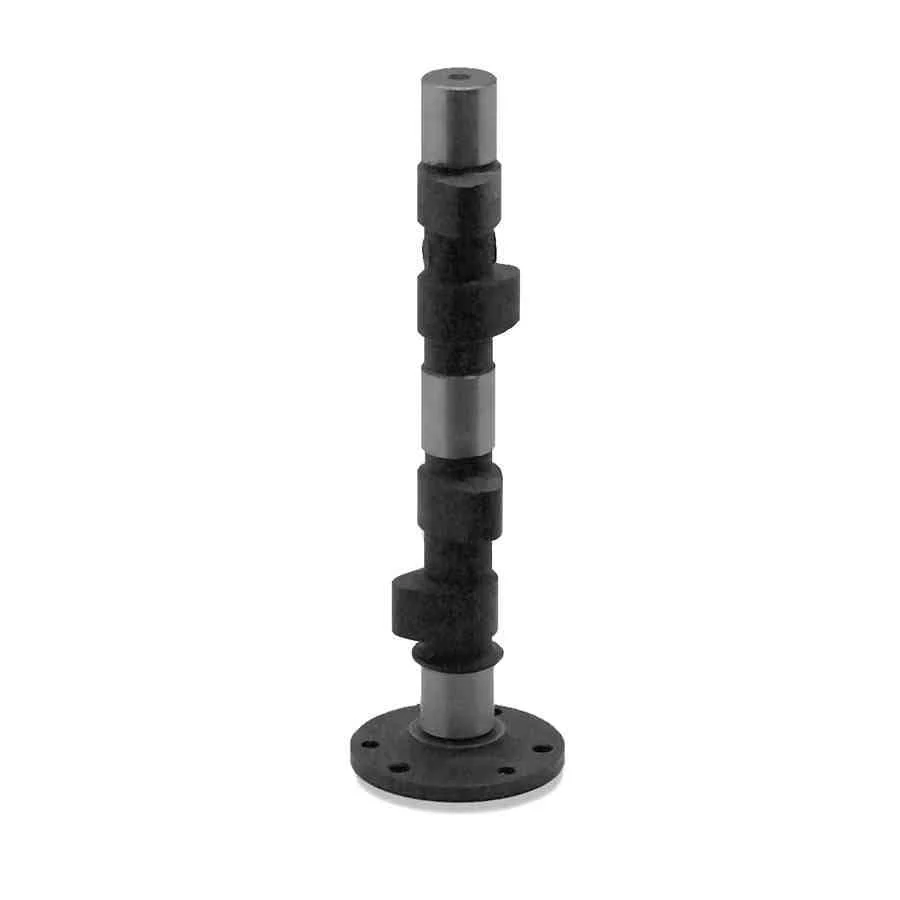
Porsche 356 912 Performer Camshaft | 102-02
Porsche Custom ground 100% new camshaft by Dema Elgin. Provides a balance of top end performance with low end grunt. For use 86mm 1720cc or 90mm 1883cc Porsche 356 engines fitted with Nickies Cylinders.
Typical specifications for this camshaft provide for up to 7000 RPM peak output HP when paired with 86mm 1720cc Nickies and 6000 RPM peak output HP when paired with 90mm 1883cc or larger Nickies. This is just a rough estimate - intake, exhaust, and cylinder heads will affect final performance.
All our camshafts must be installed with new or reground lifters; use factory valve lash specifications with stock or aftermarket aluminum pushrods
Porsche 356/912 Camshaft Installation
1. Make sure camshaft and related gears, lifters, and rockers are clean prior to installation.
2. Make sure that when installing your camshaft (TDC on cylinder #1) the timing marks line up between the cam gear and the crankshaft gear.
3. Use care installing the camshaft and related components; if anything binds or is stiff, check for proper clearance before continuing.
4. With the engine at TDC, install the distributor drive, check end play on the drive gear, and secure the distributor properly to prevent it from popping out.
Porsche 356/912 Valve Adjustment
The heel method is a simple way of adjusting the valves on your Porsche 356 or 912 engine. The theory is that if the valve on a given cylinder is at the max lift (i.e. the nose of the cam), the other valve is at the heel of the cam lobe and the valve at the heel is adjusted. This works as VW and Porsche four cylinder pushrod engines have four camshaft lobes. One lobe operates two cylinders. When the #1 exhaust valve is fully open, you can adjust the #3 exhaust valve because it is on the heel of the cam. To adjust the #1 exhaust valve, rotate the engine 180 degrees and the #1 exhaust valve can then be adjusted. All valves can be adjusted using this method as when one valve is on the nose of the cam, the other valve sharing the lobe is on the heel.
Original: $630.54
-65%$630.54
$220.69Product Information
Product Information
Shipping & Returns
Shipping & Returns
Description
Porsche Custom ground 100% new camshaft by Dema Elgin. Provides a balance of top end performance with low end grunt. For use 86mm 1720cc or 90mm 1883cc Porsche 356 engines fitted with Nickies Cylinders.
Typical specifications for this camshaft provide for up to 7000 RPM peak output HP when paired with 86mm 1720cc Nickies and 6000 RPM peak output HP when paired with 90mm 1883cc or larger Nickies. This is just a rough estimate - intake, exhaust, and cylinder heads will affect final performance.
All our camshafts must be installed with new or reground lifters; use factory valve lash specifications with stock or aftermarket aluminum pushrods
Porsche 356/912 Camshaft Installation
1. Make sure camshaft and related gears, lifters, and rockers are clean prior to installation.
2. Make sure that when installing your camshaft (TDC on cylinder #1) the timing marks line up between the cam gear and the crankshaft gear.
3. Use care installing the camshaft and related components; if anything binds or is stiff, check for proper clearance before continuing.
4. With the engine at TDC, install the distributor drive, check end play on the drive gear, and secure the distributor properly to prevent it from popping out.
Porsche 356/912 Valve Adjustment
The heel method is a simple way of adjusting the valves on your Porsche 356 or 912 engine. The theory is that if the valve on a given cylinder is at the max lift (i.e. the nose of the cam), the other valve is at the heel of the cam lobe and the valve at the heel is adjusted. This works as VW and Porsche four cylinder pushrod engines have four camshaft lobes. One lobe operates two cylinders. When the #1 exhaust valve is fully open, you can adjust the #3 exhaust valve because it is on the heel of the cam. To adjust the #1 exhaust valve, rotate the engine 180 degrees and the #1 exhaust valve can then be adjusted. All valves can be adjusted using this method as when one valve is on the nose of the cam, the other valve sharing the lobe is on the heel.